

Water Storage &
Backup Systems
A reliable water reserve on your property — so that when the municipal supply fails, your taps keep running. Water storage systems for homes, smallholdings, and businesses designed for reliable water backup systems and continuous supply security.
Municipal water supply is less reliable than it used to be
Burst pipes, pump station failures, load shedding cutting municipal pumping infrastructure, ageing distribution networks, and increasingly frequent water restrictions — the days of assuming water will simply be there when you turn on the tap are over for many South African households and businesses.
A water storage and backup system gives you a private reserve held on your property, filled during normal supply and available automatically when supply fails or is restricted. No disruption, no scrambling for alternatives, no relying on a municipality to fix the problem before you run out. These systems form the backbone of modern water backup systems and water security strategies.
Whether you want a modest emergency reserve or a substantial backup capable of sustaining your household or business for days, we design and install water storage systems and water backup systems sized to your usage and property requirements.
What is a Water Storage & Backup System?
A water storage and backup system holds a reserve of water in one or more tanks on your property, kept filled from your municipal supply, borehole, or rainwater harvesting system. A pump and pressure system delivers water from your tanks to your taps, showers, and appliances at normal pressure — automatically switching when municipal supply drops or fails.
Used as a standalone backup, tanks fill from the municipal supply during normal operation and discharge during outages. Combined with rainwater harvesting or a borehole, they form the storage layer of a fully independent water supply — holding what is collected or extracted until it is needed. This makes them a key component in off-grid water systems and hybrid water storage systems.
The result:
- Continuous water supply through municipal outages and restrictions
- A buffer against pressure fluctuations and supply interruptions
- The storage foundation for rainwater harvesting and borehole systems
- Reduced dependence on an increasingly unreliable municipal network
- Peace of mind that water will be there when you need it
- Improved resilience through integrated water storage systems for homes and businesses
Is a Water Storage System Right for You?
Water storage and backup systems are ideal for:

Residential homes
Families wanting a reliable water reserve against supply interruptions, restrictions, or the growing frequency of municipal failures — without the disruption of running dry at an inconvenient moment. Often installed as compact water storage systems for homes or larger capacity water backup systems.
Rural homes & smallholdings
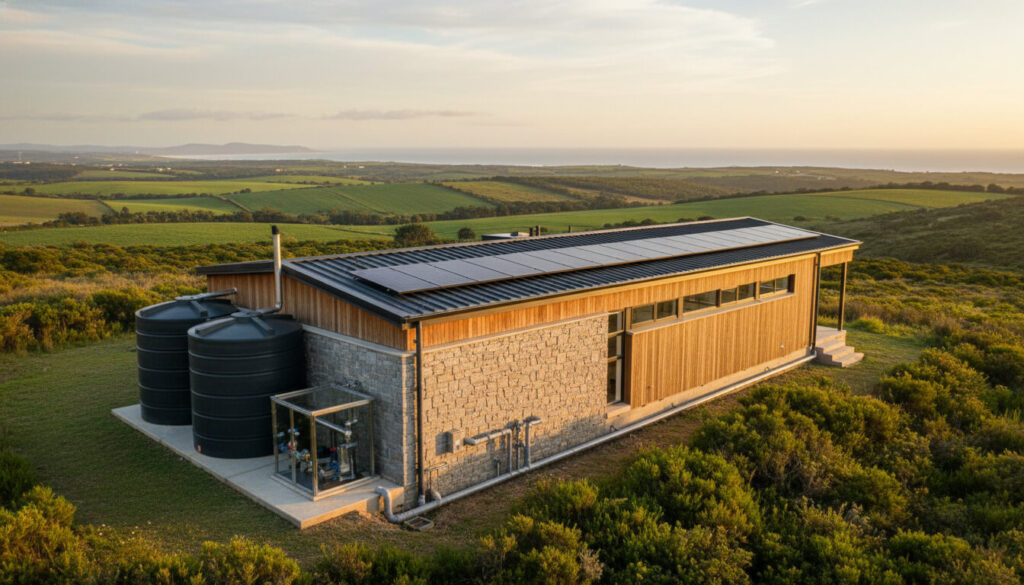
Rural homes and smallholdings that depend on a consistent water supply — where any interruption quickly affects everyday life and requires a fast, independent solution. Commonly combined with water storage systems for smallholdings and off-grid water systems.

Guesthouses & Airbnbs
A water outage during a guest’s stay is a serious problem. A storage and backup system ensures your property never runs dry regardless of what the municipality is doing, protecting your guests and your reviews.

Businesses & commercial properties
Restaurants, healthcare facilities, food production, and any business where water is operationally critical — a correctly sized backup system removes water supply as a variable your operation depends on. Commercial water storage systems are often required for operational continuity.
How it works
1
Site Assessment
We assess your daily water usage, available space for tank installation, existing supply infrastructure, and how you want the system to interact with your municipal connection, borehole, or rainwater harvesting system — giving us everything needed to design the right storage solution for your property.
2
System Design
We design a water storage system matched to your usage, your backup duration requirements, and your available space — selecting the right tank type, total capacity, pump, pressure system, and automatic switchover configuration for your specific situation. This includes both residential water storage systems and larger commercial water backup systems depending on demand.
3
Installation
Professional installation of tanks, pump, pressure vessel, inlet and outlet pipework, float valves, overflow management, and automatic switchover — all installed correctly and integrated cleanly with your existing water supply infrastructure. We install complete water storage systems for homes, smallholdings, and commercial properties.
4
Support & Maintenance
Periodic tank cleaning, pump servicing, pressure system checks, and float valve inspection keep your storage system ready to perform when it matters. A backup system that has not been maintained is one that may let you down at the worst possible time. We also offer ongoing water storage system maintenance and water backup system servicing.

Secure Your Water Supply Today
Whether you want a simple emergency reserve against municipal outages, a large-capacity backup for a smallholding or business, or the storage foundation for a fully independent rainwater or borehole system — we design and install water storage solutions for properties across the Garden Route, from George to Plettenberg Bay and beyond.
Water Storage for Smallholdings & Commercial Properties
We design and install water storage and backup systems for rural and commercial properties across the Garden Route — sized for high-volume demand, critical operational continuity, and integration with existing water supply infrastructure across large or multi-building sites.
Our commercial water storage service includes:

Full site assessment and storage system design

Tank installation, pump, and pressure system

Integration with municipal, borehole, or harvesting supply

Ongoing maintenance and system servicing

Frequently Asked Questions
A correctly installed backup system uses a float valve or automatic changeover configuration to draw water from storage when municipal pressure drops or the supply fails. It automatically refills the tanks when the supply is restored, eliminating the need for manual intervention.
Yes. Water storage tanks serve as the common point where municipal, rainwater harvesting, and borehole supplies converge and operators manage them together. We design integrated systems that draw from available sources in the right order and maintain your reserve automatically. This creates a unified water storage and backup system across all sources.
It depends on your available space, volume requirements, aesthetic considerations, and budget. Above-ground polyethylene tanks are the most cost-effective. Underground tanks suit properties where above-ground installation is not practical. We advise on the right option during the site assessment.
Yes. Inspect and clean storage tanks periodically — typically every two to three years for closed, covered tanks used for non-potable purposes, and more frequently for tanks that supply drinking water. We include tank cleaning guidance at installation and offer maintenance contracts that cover this as part of ongoing system care.
Yes — and it is one of the most practical combinations we install. A solar pump fills your tanks during the day at no electricity cost, and gravity or a pressure pump distributes from storage as needed around the clock. It removes the running cost from your water supply entirely. This is commonly used in off-grid water systems and solar water systems.